World news and comment from the Guardian | guardian.co.uk |
- MIA's revolution
- Experience: I saved my school class during a tornado
- Mohammed Ansar: My 18 months with former EDL leader Tommy Robinson
- The problem with nursing homes lies in our uncaring work culture | Ros Coward
- China: Nanjing mayor sacked in latest round of corruption crackdown
- Maldives police step in to preven rerun of presidential election
- Ariel Castro neighbour charged with murders and rapes
- US development digest: Friday 18 October
- Postmortem inconclusive on foetus found in New York teenager's bag
- Scout leaders jubilantly knock over 170m-year-old rock formation in Utah
- Blue Mountains besieged by fires, with more extreme weather to come
- From the archive, 19 October 1979: The wanderings of Odysseus
- NSA Files: Decoded – coming soon to the Guardian
- Best pictures of the day - live
- 'Smart power', where development and defence meet
- Letters: Charities and terror
- Letters: Lobby bill and judicial review change threaten democratic rights
- Letters: Energy sector's China syndrome
- Country diary: Eversholt, Bedfordshire: No mistaking the calls of rutting red deer stags
- Michael Gove learns no obvious lessons on Boston fact-finding trip
- Pilot at centre of US military sexual assault controversy speaks out
- Iran opens doors to tourists as Rouhani fosters thaw in relations with the west
- Former US House speaker Tom Foley dies aged 84
- Gay marriage in New Jersey to begin within days after court upholds ruling
- 'Muslim Patrol' vigilante pleads guilty to assault and threats
| Posted: 19 Oct 2013 01:00 AM PDT  She's being sued for flipping the finger at the 2012 Super Bowl. She's threatened to leak her own album, and has a bone to pick with the music industry, the Sri Lankan government, Google and the US family courts. What's eating art-punk-rap superstar MIA? MIA is having none of it. "I am not a conspiracy theorist," she says. "Yes, you are," I say. The great pop contrarian also known as Mathangi Maya Arulpragasam huffs. "What I said about the internet is what's happening now. It's on the front of your own newspaper. It's not a conspiracy theory, is it – unless your paper is supporting a conspiracy theory? Conspiracy theory is too much of a small pond for me to swim in." I feel suitably admonished. It's been three years since MIA released her last studio album, Maya. Its first track was The Message, a 57-second discordant rap suggesting that social media companies were working hand-in-hand with the world's governments to spy on us ("Connected to the Google, connected to the government," she chanted repeatedly). A lot of people accused her of being politically naive. Now, following the Guardian's revelations about the spying capacity of America's NSA and Britain's GCHQ, it looks as if she was stating the obvious. Does she feel vindicated? "I do. I love it." She grins. But after that third album, MIA decided she had had enough. She was bored with music, so made the gloriously titled mix-tape Vicki Leekx (a play on WikiLeaks) in two days, just to show she could, then quit. She moved to India with her baby son, Ikhyd, and wasn't heard of for ages. Now she's back, post-retirement, with a new album, so she can tell us about her retirement. Hard to get your head around? Welcome to Planet MIA. We meet in east London, where she now lives. At 38, she still looks like a little girl: beautiful, garish, loud, a handful. She arrives with Ikhyd, now four, a sweet boy with huge brown eyes. The fact that he is here with her is a story in itself. For the past couple of years, MIA has been fighting a custody battle. Until recently, it looked as if she would lose her son to her former fiance, Benjamin Bronfman, unless she agreed to bring up Ikhyd in the US. As she says, tranquillity in her life tends to be transient at best, "the calm before the storm". MIA prides herself on her normality. Her publicist tells me that she is one of the few stars who will turn up by herself, no fuss, just a regular civilian. But appearances can be deceptive. Sure, we're not far from the council flat where she grew up, but this is a fancy members' club with a pool on the roof and hipsters perched on sun loungers, cocktail in one hand, iPhone in the other. And she fits in perfectly: floral silk shorts, face-dwarfing shades, numerous bracelets, bags of confidence. Within seconds, Ikhyd is crying. He has been told he can go swimming, but the pool has been divided into lanes for adults. She mops his tears and they strike a deal. Her mini entourage takes him off for a treat, while we're left to chat conspiracies, terrorism, even music, as if she's never been away. MIA emerged on the music scene in the mid-2000s, the perfect antidote to confection pop. For a start, she wrote much of her own music, an unlikely, often inspired mash of rap, nursery rhymes, bhangra, electronic dance and punk. Music writers created a whole new lexicon to describe her sound, including the fabulous "gangsta shoegaze". But she railed against commercial success, and at the first sniff of a big hit – Paper Planes, which sampled the Clash's Straight To Hell, and made the US and UK top 20 – she recoiled. Yet she couldn't resist making headlines, whether for performing at the 2009 Grammys in a transparent dress when nine months pregnant, or giving the audience the finger at the 2012 Super Bowl. She is so much the perfect anti-pop star that sceptics have suggested her story is too good to be true: that in her own radical way MIA is as much of a brand as Madonna is. And, to an extent, this is true. She says she grew up being told what she could do: as a girl, as the child of a single parent, as a musician, as a commodity. "If you're making music, don't talk about politics. If you're talking about politics, don't wear lipstick. If you're dancing in a club, don't talk about Sri Lanka." Sod that, she thought. "Actually, you can put the concept of freedom of speech next to rap music, next to my untouchable dad, who people talk of as a terrorist, next to random creative shit." Which is exactly what she did. Her first album, Arular, named after her Tamil father, featured a song about refugees learning to say banana, which segued into the socialist dance track Pull Up The People, then into Bucky Done Gun, a boastful rap announcing her arrival. You could see her art school background in the attention to detail, in the way she dressed: the pastel green eyeshadow, fuchsia lipstick, neon prints. At times, she looked like a Fauvist painting. She has collaborated on a string of brilliantly cinematic videos: Romain Gavras (the son of film-maker Costa-Gavras) directed Bad Girls for her, with its high-speed car chases, and before that Born Free, which tackled the issue of ethnic cleansing by showing redheads being rounded up by police and taken to a desert to be shot. It was meant to stoke controversy, and sure enough YouTube refused to host it. She has had surprisingly few hits (Paper Planes is her only really successful single) and many have failed to chart, yet Jay Z, Kanye West and Madonna, all far more commercially successful artists, have wanted to collaborate and borrow some of her credibility. We're sitting on a hanging sofa in the shadows, and MIA is swinging away happily, drinking coffee. It's the last thing she needs: she is talking 15 to the dozen about everything she's been doing, from stressful court appearances to painting and finding herself in India. She talks excitedly about how she became interested in Hinduism and explored the origins of her name, until everything began to make a weird kind of sense. Her music has always been about family: a search for identity that often raises more questions than it provides answers. Her second album was named after her mother, Kala. Her third album was Maya, the name she grew up with in England and still goes by (it's easier for English people, she says). And now Matangi, her birth name. She was born in Hounslow, south-west London, in 1975. When she was six months old, the family moved to Jaffna, a Tamil town in Sri Lanka. She barely remembers her father Arul, even though she has read plenty about him. He left to join the struggle for Tamil independence, and she and her two siblings were brought up by her mother. They went into hiding from the Sri Lankan army, then moved to Tamil Nadu in India. Just before her 11th birthday, they came to England as refugees; her mother worked as a seamstress for the royal family. She says that whenever she asked her mother why she was called Mathangi, she got a vague answer about being named after a newsreader. She didn't think any more about it until she became interested in Hinduism. "When I typed in Mathangi, I found out Matangi [without the h] was this goddess of music, and the second link was me, MIA, rapper. I thought, this is funny, and within an hour there were so many things that linked up all these things." She talks about these coincidences or not-quite-coincidences as if they were divine revelations. "Matangi's mantra is aim, which is MIA backwards. She fights for freedom of speech and stands for truth, and lives in the ghetto because her dad was the first person in Hindu mythology who came from the 'hood, but had gained enlightenment through not being a Brahmin." Did she shout, "Mum, I've worked out why you called me Mathangi: I'm the goddess of music!"? She looks at me as if I've totally missed the point. "No, my mum and dad are Christians." So why has Hinduism been such an influence? "It isn't. I Googled it." She goes off on one about Brahmins, untouchables and the caste system: all the reasons she could never embrace Hinduism. What she has embraced instead is a homemade belief system, a potage of pyramids, squares and circles. "I devised this theory that the world is made out of three types of people. Squares are logical and scientific. They create tools, so Steve Jobs would have been a square. The pyramids are the money structure and the religious structure and the ideological structures built by human beings. It's always a pyramid: the guy at the top, billions of people on the bottom, and you have to claw your way to the top and kill a lot of people on the way. The circle is all the other stuff we can't explain. If you cut a tree, the rings are circles, your eyeballs are circles, cells are circles. Einstein discovered how to split a circle and it resulted in the most negative thing for humankind. You can't fuck with the circle. And to be a successful human being, you have to understand all three concepts." Blimey. So she's created a new religion of squares, circles and pyramids? She swings away enthusiastically, and looks pleased with herself. "I did. I justified the world." Where does she see herself? She gives me a withering look, astonished at my stupidity. "No, I said you have to have knowledge of all three. I use my computers to make my work. I'm in the music industry, which is a pyramid, and I'm a human being. If you cut me, I've got round circle cells." What she really wants to know is, who and what is at the top of the pyramid. "I don't have an answer. You can only ask the questions to the guy at the top." Why not go around the world, asking all the people at the top? "I'd probably get killed in the first 24 hours. They'd be like, 'Oh, yeah we'll show you!'" She's joking, and she's not. Actually, she does have an idea about what's at the top. Space. "What is the promise? That we go to space? How many people will go to space and colonise another world? The person who gets to the top usually has to be a cunt to get to the top. So they are going to get on a spaceship and go to another planet and populate a world, so why would you want to live there?" My head is spinning. She's philosophised me into a state of confusion. She grins. "Confusion is good, isn't it?" In a way, she says, that's what all her work is about. "It's a landscape of confusion." Do friends find her pronouncements bewildering? Do they go… She's already laughing and answering the question: "'Shut up.' Yeah, that's the thing. Half the time people think I'm high, but I'm not." If MIA thinks the powers that be are out to get her, it's not entirely surprising. When she criticised the Sri Lankan government in January 2009 for its alleged use of chemical weapons on Tamil civilians, the foreign secretary, Dr Palitha Kohona, said she should "stay with what she's good at, which is music, not politics". If she is combative, it's because she feels she's spent her whole life fighting. She was turned down when she applied to study art at Central Saint Martins, but when she told them the decision would ruin her life and she'd end up a "crackhead prostitute", they let her in for sheer chutzpah. She started out making videos for her friend Justine Frischmann's band, Elastica. It wasn't until she went to Sri Lanka to make a film about her cousin Jana, who had gone missing in action, that she morphed into MIA. "The day I graduated, I heard about Jana. There was a story that he'd died. Then somebody said, no, he's alive, but he's a vegetable. Then somebody else said, no, he's just MIA. When someone in Sri Lanka joins the movement, you never know what happens to them. I grew up with him for 10 years; he was like my twin. So the first time I used MIA was when I was looking for him." The film turned into an exhibition, and then into her first album, Arular. When she made Arular, she contacted her father and told him she was going to name it after him. He forbade her. Why? "I don't know." So what did she say? "I was like, it's the only thing you gave me: I'm going to fucking use it." She sounds awestruck when she talks about her father. She says he was sent from Sri Lanka to the Soviet Union to study as a teenager, where he thrived in a harsh environment. "My dad grew up in a mud hut and studied by candlelight. He was 14 when he got a scholarship to Russia. He was super clever – the cleverest person. He landed in 5ft of snow, and was alone at 14, studying science and engineering. He didn't have a bed and he slept on a table." It sounds like a novel. "He was tough because he was poor, and I can't imagine Russia being tolerant to brown people in the 60s or 70s. It can't have been a walk in the park." Yet at times she seems to despise him, too. In the trailer to a fraught, much-delayed documentary about MIA, leaked this summer by its director, Steve Loveridge, we see footage of a younger, lisping Maya talking to a camcorder. "This is what happens to a kid whose dad went off and became a terrorist. And this is how it fucked up the family… He was one of the five original members who founded the most lethal terrorist organisation the Tamil Tigers." However much she condemns the hypocrisy of traditional marketing, she knows her backstory has cachet. She has denounced others for calling him a terrorist, saying he was a freedom fighter in Sri Lanka's non-violent revolutionary student movement Eros. Which is true? "He was a member of Eros. It was an intellectual movement." So why does she call him a terrorist in the film? She didn't know any better, she says: "How many 20-year-olds do you know who know of individual struggles, and the names of each group? The media brand every struggle against the state as terrorism." The reality is that she's not sure; there is often no simple demarcation between peaceful and violent protest within a revolutionary group. Anyway, she says, the bottom line is he did screw up the family. In Sri Lanka, she was told that she wouldn't make anything of herself because she was raised by a single parent. There was more of this when she came to Britain. "At school, teachers said you're going to be fucked up, you're going to stack shelves at Tesco because you don't have a dad. And statistics say that 80% of kids from single-parent families are losers. So by the time we got to where we got to, we realised we had to fight 10 times harder." In the event, she and her siblings all did well for themselves; her sister, Kali Arulpragasam, is a successful jewellery designer. Is she angry with her father, or proud of him? "Neither. Just curious." Where does she stand on Tamil independence? "I support Tamil people, of course. I always have. Whoever sticks up for Tamil people will have my support." Is she still in touch with her father? "No. No. I guess I'm like him a bit. A bit of a loner. I like to do my own shit, then set off." Look, she says, it's no big deal. "We don't come from a culture where we have to have group therapy. It's just a very dysfunctional modern family. That's what we are." As for her mother, they couldn't be closer. "She's taught me how to be creative, open-minded, loose and strong. Strength in a different way. Strength through endurance." Given her relationship with her father, the thought of losing Ikhyd must have been terrifying. I ask about her custody battle with Bronfman, whose father ran Warner Bros. She says she can't really talk about it, but of course she does – and with some anger. "In America, it's not the mother who has the say. The legal system sides with money. It doesn't side with truth, it sides with who has the best presentation of truth. I guess it was a lesson I had to learn. So you just had to be really good at lying. And I'm not very good at lying. I just can't be bothered. When it comes to basic shit, like a mother and child, you have a huge judicial system that no longer backs them up." If that's the case, why couldn't she have simply bought the best lawyer and won the battle with the best arguments? "I'm not going to go against the billionaire with my money. Ultimately, I'm a working mum. I don't have parents who have tons of money who can fund my shit for 20 years." Is that what it came down to, going up against a billionaire? "Well, it was the idea that I was wild, a rock star mum, versus a financial institution, and fighting it in a country where financial institutions ultimately have the power. As a mum, my experience of the law in America was disgusting, because mums don't have a say. And I'm not going to change that, because it's going to take a nation of mums to stand up for it." She says the irony is that after 9/11, she found it difficult to get into America, because of her support for the Tamils. Then, after she and Bronfman split up, she and Ikhyd found it impossible to leave; there was thought to be a risk she would abduct him. A few months ago, she finally won her battle and her relief is still palpable. In June she tweeted: "FREEEDOM > ME AND IKHYD IN LONDON TOWN! HOOOOOOOOOO MMMMMEEEEEEEEEEEEEEE!!! NICE TO BE OUT OF DARKNESS." Has her experience put her off men? "No. I'm in a relationship and have been for some time, and I'm happy." In fact, she's more than happy: "I'm in a state of nirvana." Nothing is going to spoil her mood. Not arguments with her record company, who have delayed the release of the new album to the point where she has threatened to leak it herself. Nor fallouts between Loveridge, the director of her documentary, and her management ("Count me out," he told them. "Would rather die than work on this"). Now the NFL is suing her for $1.5m over her middle-finger at the Super Bowl, but she doesn't care about that, either. "It's a massive waste of time, a massive waste of money," she says in a video posted last month on YouTube. "It's ridiculous… a massive display of powerful corporation dick shaking." It's also an example of the hypocrisy of the music business, she says, pointing out that while she is scapegoated for her "display of female empowerment through punk rock", the NFL was happy to have cheerleaders "under 16… hips thrusting in the air, legs wide open… in a very sexually provocative position". Misogyny and the exploitation of women are a recurrent theme in her music. What does she think about Miley Cyrus and her twerking? "It's a spectacle," is all she'll say. "I'm not talking about anyone else." She has more respect for Madonna's brand of self-exploitation, and tells me a funny story about a song she offered her from the new album, Sexodus. "I actually played that song to Madonna when I wrote it and said, 'Oh, you can have this.' She gave it back to me." Madonna didn't think it was right for her, but MIA still wanted to know what she thought of the question behind it: when you have it all, what should you do with it? "So I was like, what d'you do? And she said, 'You spend it!' And I said, no, I don't think that's the right answer." Did it change her opinion of Madonna? "No, because Madonna is true to Madonna. She always said she was a material girl." Is the delayed release of the new album down to conflict with her record company, Interscope, or the result of personal problems? Time for another conspiracy: "Both. I thought, it's funny the shit in my life started only when I handed my album in." The custody battle? "Yes, my personal life, and it's really hard for me to separate them." My own experience suggests MIA is probably as responsible as the record company for the delays. In August, I was sent an early copy of the album, but after a couple of days had it whipped away from me, "for minor tweaking". I didn't get it back until two months later, and it was noticeably different. There's a bit of everything, from Hindi punk rap to the self-referential Boom Skit about her time in America ("Brown girl, turn your shit down… Let you into Super Bowl, you try to steal Madonna's crown"), to the gorgeous lushness of Sexodus, a collaboration with The Weeknd. Then it was whipped away again. All she wants to do is get it right, MIA says. After all, so many things have turned out fine: she's back in London with Ikhyd, she has a new love, a new record and a better understanding of her place in the music industry. "Nirvana has nothing to do with making money, nothing to do with having a number one single on Billboard, nothing to do with me sucking anyone's dick." Was there a time when she thought she'd have to go down that route? "As a human being, you're bombarded with that image every day." Is it hard to resist? "Yes, of course it is. The only way I could do it was because I came from a fucked-up situation, so I knew how to survive on a fiver – I tasted real struggle. But if you're a kid that's grown up in England in a semi-OK environment, it's difficult. You're going to have the fear, aren't you? The assumption of darkness is scary, and that's what it works on." Meanwhile, MIA is content to plough her own furrow. She fancies going on The X Factor in disguise. "I was thinking of wearing a burqa and auditioning." How far would she get? "First round? No, second round. They'd give me a second go, because I'd be in a burqa and they'd be politically correct. Then I would get kicked off." Does she think she's a good singer? "Course not. No! I'm just a… not really a singer, I don't know what I am." Is she a musician? "No, I don't consider myself a musician. I'm an artist." In her documentary, she has a pretty good go at defining herself: "I could be a genius, I could be a cheat," she says. "It's a thin line and I'm fuckin' with it." By the time you read this, MIA may well have retired again. "I don't know what comes next," she says. "I guess I'll have to live a little before I decide." How would she feel if Matangi went to number one? "Matangi lives on the outskirts of the mainstream. It will never go in the charts." Would she be appalled if it did? "Pretty much, yeah." • Matangi is released on 4 November, on Neet/Virgin EMI. theguardian.com © 2013 Guardian News and Media Limited or its affiliated companies. All rights reserved. | Use of this content is subject to our Terms & Conditions | More Feeds       |
| Experience: I saved my school class during a tornado Posted: 19 Oct 2013 12:00 AM PDT  'My dad rang, warning me that there was a tornado on the ground and it was heading straight towards us' We don't usually get storms in Oklahoma in May, and although it was unseasonally humid, we were having a fairly unremarkable school day. I'm a special needs teacher and I'd seen the last of my class of five-year-olds leave when my dad rang to warn me that there was a tornado heading straight towards us. At first, I thought he couldn't be right, but then the tornado sirens went off. My own daughter, Kali, was at the school, in the kindergarten class across the hall, and that's where I headed. Her teacher, Jennifer, was following the standard procedure: moving the 10 children into the hallway, getting them to kneel with their elbows on the ground, hands over their heads. We encouraged the children to sing, to keep up their spirits, but when the skylights started to shatter and the lights went out, it became harder to keep everyone calm. Hail and broken glass showered into the hallway. Instinctively, Jennifer and I took five children each and lay across them. It wasn't something we had to think about: they were tiny children; we were adults and we would protect them with our lives. My daughter was among those I was shielding. I just kept saying over and over, "We're going to be OK. We're going to be OK." But soon I couldn't hear my own voice above the sound of the school's metal roof popping under tremendous pressure. Then came a noise so loud I'll never forget it, like a jet aircraft but 10 times louder: it was the tornado passing directly overhead. Suddenly I was being pelted with debris. I realised the roof had gone; the wind had torn it clean off. We were at the mercy of the elements. My mouth filled with dirt and I wondered if we were going to be buried alive. Beneath me, the children clung together tightly. I did my best to cover them, but now there was water, too, pouring down from ruptured pipes. Then I felt a blunt, jarring impact against my back. By now, I was simply repeating to myself, "Please go away, please go away." I just wanted it to stop. By the time it did, I felt we had been in the eye of the storm for hours, though I later learned we'd been sheltering the children for something like seven minutes. As the chaos subsided, I could hear voices, people from the community calling out to those trapped in the wreckage of the school. It was only when I finally dared raise my head that I discovered we needed rescuing ourselves: a black SUV had been hurled out of the school's car park and lay across us, upside down. It had been prevented from crushing us by a pile of rubble, but I'm sure it's what had hit me in the back. Once the car had been hoisted away, Jennifer and I were able to check on the kids. The worst anyone had suffered was a ruptured eardrum; Kali had a scratched leg. Frantic parents were arriving all at once, desperate to know if their children were safe. We would later learn that seven children had died when a wall collapsed on them, and as we picked our way through the ruins it seemed extraordinary that anybody had survived at all. A doctor examined my back and said I needed a checkup at the local hospital. Kali came with me in the ambulance, which drove us through scenes that looked like the end of the world: the tornado, more than a mile wide, had levelled whole streets. My husband and older daughter didn't reach us until almost midnight. I'd learned my back would be fine, despite heavy bruising, but when I saw them the shock and relief finally kicked in. I thought I'd never stop sobbing, and my husband was crying, too. Meanwhile, Kali was proudly showing him her new glasses. "Look, Daddy!" she said. "You told me to take care of these, and they're not broken." We all met up quietly with our classes before term started, to talk over what had happened and remember those we'd lost. There were tears and hugs; we're all closer now, I think. But even though Kali and I suffered nightmares, watch weather reports nervously and freeze at the sound of a passing jet, I would never move away from Oklahoma. I owe it to the children of this community to keep them safe. If we were hit by another tornado, I would want to be there to do the same again. • As told to Chris Broughton Do you have an experience to share? Email experience@theguardian.com theguardian.com © 2013 Guardian News and Media Limited or its affiliated companies. All rights reserved. | Use of this content is subject to our Terms & Conditions | More Feeds       |
| Mohammed Ansar: My 18 months with former EDL leader Tommy Robinson Posted: 18 Oct 2013 11:59 PM PDT  I'm not sure how much I changed the former far-right leader's views on Islam, but I don't regret making a film with him Tommy was much shorter than I anticipated. Surrounded by an entourage, huddled in one corner of the green room, he kept shuffling uncomfortably and throwing his shoulders back. He looked like someone who was getting ready for a fight. We didn't make eye contact, but it wasn't long before we were called down to the makeshift studio in the grammar school in Bury. It was April 2012, and it was my first face-to-face meeting with Tommy Robinson (real name Stephen Yaxley-Lennon), the leader of the English Defence League (EDL). We were appearing on a BBC1 programme called The Big Questions. Little did I know this would be the start of an 18-month journey together that would end with Tommy leaving the EDL. It's odd the little things I remember about that encounter. It felt almost like an out-of-body experience to sit opposite the leader of the English far right in a television debate. As discussions got under way – I called for the EDL to be proscribed and talked about links between EDL ideology and the Norwegian killer Anders Breivik - I found myself distracted by Tommy's hair. It was slicked to one side as if prepared for a school photo. Then, as the debate continued, the protests outside the studio seemed to fade and something slightly odd happened. We shared a moment of levity, perhaps humanity. As the presenter, Nicky Campbell, spoke into the camera, Tommy and I looked at each other and cracked up slightly. I'm not sure why, but Twitter noticed. Robinson was no friend of mine, and albeit condemned by people around the world as an enemy to Islam, but suddenly we were kids at the back of the class. It was an odd position to find myself in. I had spent years as an outspoken advocate against Islamophobia, working to counter extremism and trying to address what I felt was an emerging civil rights crisis for Muslims in Britain. Muslim communities everywhere were under threat, attacks against mosques and individuals were at epidemic levels and rising. Yet the Islamic tradition is that you do not try to crush those who wish to oppress you, you try to educate them. You pray for them. You enlighten them. Despite the heated exchanges that day, I was able to extend to Tommy an offer: that we have dinner. There was immediate uproar. Twitter erupted into a cauldron of hate as I started receiving around 200 hate-filled tweets a day - from hardcore Salafists, far left anti-fascists and, of course, the EDL. But we pressed ahead, and agreed we should film our shared journey. I met Tommy later that month at a hotel somewhere near St Albans. He was flanked by a cameraman and was clearly revelling in his cult celebrity status - the working-class voice for the common man, little Englander, defender of the English. Tommy seemed happiest when he slotted into his groove – a well-rehearsed hustings tirade conflating Islam with terrorism, paedophilia and sharia. It hadn't been too hard to figure out that verbally attacking him in return would merely cause the barriers to go up. Islam advocates a soft-hearted, patient approach. So despite the occasional urge to let rip, I had no choice but to talk to the man, not the caricature. Three hours of debate followed. Tommy meanwhile seemed to enjoy ordering the most expensive thing on the menu. He liked his steak on the rare side. At the end of it we both tweeted two statements from Tommy – that I "must be reading a different Qur'an to everyone else" and "if every Muslim was like you there would be no problem". The response was shocked and sceptical. That I had passed the Tommy Robinson test for acceptability was nothing to be pleased about. He had to meet more people. We needed to do more work. In the midst of all this came the brutal killing of drummer Lee Rigby. The morning after, I joined the media junket in Woolwich. I felt we needed to not only condemn the attack but to promote unity among communities, to call for tolerance and to ask for people to search out peace. A few days later I met Tommy again, in the back streets of Newcastle, where an EDL rally was being held. We got into a heated debate almost immediately. I challenged him, claiming he was going to stoke fear and increase tensions. He was pumped. He wasn't listening. A sizeable crowd gathered quickly at the end of the road and our debate ended up being little more than a platform for Tommy to vent. And then it happened again. We both looked at each other, sighed, laughed and before I knew it, he had put his arm around me. A little taken aback, the anti-fascist in me despised it, but the person of faith accepted it. I had to laugh. How can we begin to build a bridge if I cannot accept a gesture, however cynical? It was only when I arrived in Bristol the next morning that Nicky Campbell showed me we had been "papped" and the picture was in the Sunday Mirror. The furore about the image spread around the world, particularly the Muslim world. It was the first and only time that I doubted the process and my conviction that dialogue was the way forward. But in the end, there was an overwhelming consensus that to accept Tommy's gesture (however cynical) was in line with the prophetic traditions, and the correct Islamic adab (manners). Voices who wanted unity and a new hope for the future were drowning out those who rejected a peace process. For the record, no – it was not a hug from me, not really. So our journey together continued. Despite both my mother and wife questioning my sanity, I had always wanted to stand up and address an EDL meeting, and come face to face with Tommy's supporters. A town hall-style meeting was arranged at a hotel in Luton. Because of the risks, the crowd was limited to around 50 people, and I was given a four-strong security team, including my own bodyguard, a Jehovah's Witness called Rudi. It was a stressful experience. The anger and hostility from EDL members surfaced over things I thought long gone, with the National Front-daubed brick walls of 1970s Britain: coming over here and taking our jobs and our women, erosion of culture (they even believed they were limited from practising Christmas), multiculturalism, immigration. It was important to listen – they are not uncommon views. Painful ones. At the end of the meeting, I had to break my fast, as required in the month of Ramadan. I invited Tommy back to my room and he stood with me as I offered a dua supplication/prayer. We ate food from a local Indian takeaway. Tommy's insistence on refusing halal meat on camera was a regular theme throughout our time together, despite the fact he eats it at Nandos and his favourite Turkish kebab shop. As I prayed maghrib (sunset prayers) he watched, quietly. Tommy has always been much better to talk to in a one-to-one setting. We could have a real conversation. When the camera was rolling, I felt we rarely saw the real Tommy. One of those days when we did see him was when visiting the Aisha mosque in Walsall. In the wake of an attack on the mosque, the committee had – remarkably – invited Tommy and I to film there. We arrived to find they had prepared an enormous spread of food (while Tommy was respectful he still refused to eat) and we toured the mosque with sheikh Ibrahim Mogra, assistant general secretary of the Muslim Council of Britain, discussing the place for an enlightened Islam and mosques in contemporary society. It felt as if we were making progress. Our last scheduled day of filming took place at a club in Mayfair earlier this month. Afterwards, I had a private discussion with Tommy. He had certainly softened on some of his views of Islam, he was better educated, but it was a question of whether he could leave the politics of prejudice behind and face the public and his tribe. He believed that the EDL would "fall apart" without him at the helm. A week later Tommy held a conference with Maajid Nawaz, of the counter-extremism thinktank Quilliam, and announced he was quitting the EDL. I was cautiously optimistic. Throughout the journey my aim had been simple – to see if we could move Tommy on his views and to see if the British public would shift on theirs. My view had always been that any new future should be conditional on Tommy distancing himself from former extremist pals, and that shared ideology. In the coverage that followed Tommy's announcement, I began to wonder how far he had really renounced his previously held views and whether the film had been a cynical ploy on his part. He seemed to have refined his rhetoric but little else. And there remains legitimate concern now about the mainstreaming of Tommy's far-right, extremist views. My journey with Tommy has shown one thing – that to embrace diversity in modern society we need to work out our differences. It's often a messy and imperfect process, but it's vital that we remain hopeful. Discourse and dialogue can work. How else can we tackle hate and prejudice? The answer to hate is not more hate. It remains to be seen how genuine Tommy's move from the far right is. For my part, I will continue to work to help reduce prejudice against Muslims and Islam in this country. But despite my reservations about Tommy, I would do it all again. Quitting the English Defence League: When Tommy Met Mo can be seen on BBC 1 Monday 28 October at 10.35pm • Comments for this article will be opened at 9.30am on Saturday 19 October. theguardian.com © 2013 Guardian News and Media Limited or its affiliated companies. All rights reserved. | Use of this content is subject to our Terms & Conditions | More Feeds       |
| The problem with nursing homes lies in our uncaring work culture | Ros Coward Posted: 18 Oct 2013 11:00 PM PDT  Moving my mother into a home wasn't easy, but Jeremy Hunt's Chinese peasant model is not the answer My mother went into a nursing home earlier this year. Contrary to Jeremy Hunt's suggestion that people casually consign elderly relations to care homes rather than caring for them themselves, it was one of the most painful decisions I've ever taken. Judging from others I met in the same situation, my feelings were typical. No one takes these decisions lightly. As it turned out, my mother's move was far less painful for her than for her family. At the care home she was embraced by a loving and stable staff who worked hard to settle her in. By contrast we had to discover fast just how little support, financial or otherwise, there is for our elderly people. Decisions about putting a relative in care are often taken, as in my case, after a critical illness, with the hospital telling you simultaneously your relative needs care and that she is bed-blocking. At this crucial moment relatives find themselves faced with major financial decisions. If an elderly person owns their home they have to sell it to fund care. If you don't have money or property to sell, the "cheaper" social services-approved homes are your only option. The government has said it plans to ease things for relatives by allowing them to enter into "a deferred payment scheme": relatives can borrow care-home costs from the council and sell the family home later. Good luck to you with that one. We applied to this scheme via Wandsworth council, which is meant to be pioneering it. No one knew how it worked, there was no one to deal with it and eventually, after three months of wasted time, meetings and frustration, we abandoned the attempt. Of course, Hunt is right to highlight the wider tragedy of being old and lonely. Many old people have suffered family bereavements, or are living far from their families. But this isolation also results from social as well as attitudinal forces. At the forefront is a work culture that makes no proper allowance for caring, not even for children, let alone elderly parents. My own workplace has vague policies about not discriminating against those who care for elderly people. But that doesn't translate into any real recognition of how this role affects performance. Nor is there much choice about where we live: we go where the work is. This makes Hunt's comparison with China glib. There may be more respect for older people there, but the health secretary is drawing on the old peasant model, where grandmother pods beans in the corner of the yard. Contemporary Chinese society is undergoing convulsions more drastic than those that produced our own atomised society. Those of the generation resulting from the one-child policy are finding themselves responsible for several grandparents. Far from being available to look after them, they are studying and working abroad. Already, middle-class Chinese people employ lower-paid domestic servants to live with grandparents, while elsewhere mega-care homes are being planned. Our society has an additional problem of longevity. We are now able to keep elderly people alive who are suffering multiple and complex medical conditions. These people are often housebound and barely mobile, adding enormously to the dangers of isolation. As a society we need to feel more compassion for elderly people, to talk to them in shops, help them across the road, sit with them when they eat alone in pubs. There are people who do this, but not enough. But social forces require social solutions, such as adequate and unrushed care support provided at home, or lunch clubs and day centres and transport to get people to them, and dedicated social workers and more support, both moral and financial, for those who go into nursing homes. These cost money and need political solutions. In a society as complex as ours, nursing homes shouldn't be the "last resort" with all that that implies but well-supported, pleasant places where elderly people can be safe and, dare I say it, happy. The irony for me in Jeremy Hunt's speech is that now my mother is settling into a kindly home, the one thing I don't have to worry about any more is her being lonely. theguardian.com © 2013 Guardian News and Media Limited or its affiliated companies. All rights reserved. | Use of this content is subject to our Terms & Conditions | More Feeds       |
| China: Nanjing mayor sacked in latest round of corruption crackdown Posted: 18 Oct 2013 10:02 PM PDT Ji Jianye removed for 'suspected serious disciplinary violations', two days after it was announced he was being investigated       |
| Maldives police step in to preven rerun of presidential election Posted: 18 Oct 2013 08:42 PM PDT Constitutional crisis looms after vote is called off over failure to resolve voters list dispute       |
| Ariel Castro neighbour charged with murders and rapes Posted: 18 Oct 2013 08:08 PM PDT Increased scrutiny of Cleveland block after Castro's arrest led to Elias Acevedo, who admits murdering two women in the 1990s       |
| US development digest: Friday 18 October Posted: 18 Oct 2013 07:35 PM PDT Follow our updates on people, policy and perspectives       |
| Postmortem inconclusive on foetus found in New York teenager's bag Posted: 18 Oct 2013 07:04 PM PDT Police at first said the foetus had been born alive and may have been asphyxiated, but later retracted       |
| Scout leaders jubilantly knock over 170m-year-old rock formation in Utah Posted: 18 Oct 2013 06:00 PM PDT Outrage after triumphant video of destruction by Boy Scouts of America leaders in Goblin Valley state park goes on YouTube       |
| Blue Mountains besieged by fires, with more extreme weather to come Posted: 18 Oct 2013 05:25 PM PDT Fires threaten homes around Springwood and Bell on another exhausting day for firefighters       |
| From the archive, 19 October 1979: The wanderings of Odysseus Posted: 18 Oct 2013 04:04 PM PDT  Odysseus Elytis, 68, who was yesterday awarded the Nobel Prize for literature, can hardly be called a name to conjure with YIVA WIGH IN ATHENS Odysseus Elytis, 68, who was yesterday awarded the Nobel Prize for literature, can hardly be called a name to conjure with. Although critics have called him the foremost poet of Greece, he has, he says, spent most of the last 20 years turning down literary awards and honours. "As time passes I become more frightened of the glare of publicity. I even get a strange feeling when I see my books in a shop-window. What do you want of me? I try to avoid the limelight. That's why many people think I have no ambition or aspirations. But that's not so. I do have some aspirations, it's just that I don't get any pleasure out of public applause. "My ambition is simply that young people be able to turn to my books when they feel lonely. This sort of indirect personal contact, provided it is lasting, is what I consider all-important. For me poetry is a war against time and decay. I wage this war alone in my flat, and that's how I find satisfaction whether or not I win. In a materialist age which values quantity above quality, I regard poetry as the only thing that can preserve man's spiritual integrity." He received the Greek national prize for literature two decades ago: when he heard a few days ago that he might be offered the Nobel Prize he admitted that he would be neither able nor willing to turn it down: the award would be an honour not just for himself but for his country. The themes of his work are taken from aspects of Greek nature – the islands, the sea, the sky, the mountains, the flowers and above all the sunlight. He is the first Greek poet to make the sun a central theme of his poetry: hence his nickname Iliopolis Elytis – Elytis the sun-drinker. But his poetry is much more than a homage to nature. Natural phenomena are the vehicles for other messages. Elytis has tried to distil the essence of what is truly and peculiarly Greek in Greek history and literature from Homer to the present day. He has taken a close interest in the Greek language itself. Elytis was born on Crete, the youngest of six brothers and sisters (the family originally came from Lesbos). When he was three, they moved to Athens where his father and an uncle established a soap factory. Since the family name Alepoudelis was thereafter always associated with this factory, Odysseus changed his name to Elytis. He lives in a small two-roomed flat in the centre of Athens. He sleeps by day and works at night. It might seem strange that the poet whose nickname is Sun-drinker produces his work at night. But etched in his mind are the pictures which he brings back from his long summer voyages over the sun-drenched Aegean Sea. These archive extracts, compiled by the Guardian's research and information department, appear online daily at gu.com/fromthearchive theguardian.com © 2013 Guardian News and Media Limited or its affiliated companies. All rights reserved. | Use of this content is subject to our Terms & Conditions | More Feeds       |
| NSA Files: Decoded – coming soon to the Guardian Posted: 18 Oct 2013 02:20 PM PDT 'Emails, web browsing activity, telephone calls, satellite phone calls: any kind of communication, the NSA wants it.' But what does this mean for you? Our upcoming NSA feature explains all       |
| Best pictures of the day - live Posted: 18 Oct 2013 01:46 PM PDT The Guardian's photo team brings you a daily round-up from the world of photography       |
| 'Smart power', where development and defence meet Posted: 18 Oct 2013 01:02 PM PDT  The US state departments, defence and USAid need greater co-operation to tackle conflict and poverty in the world The United States has not been getting high marks these days for good governance. But even in the best of times, balancing defence, diplomacy and development is largely an afterthought for both politicians and the American people. Years of military build-up, have left the linkages between these fields badly skewed, with Washington spending lavishly on defence but scrimping on long-term investments in diplomacy and development. George Kennan summed up the 20th century American attitude towards national security as "the continued ability of the country to pursue the development of its internal life without serious interference … from foreign powers." That conception is outdated, and many of the challenges facing the US – from climate change to global food security or transnational terrorism – cannot be addressed through force alone. The era of splendid isolation has ended, like it or not. In 2008, the Center for American Progress (Cap), a progressive think tank in Washington DC founded by former White House chief of staff John Podesta, launched the sustainable security project in an effort to develop solutions for these complex scenarios and better balance the three legs of America's international engagement. Too often, experts engage with military, diplomatic or development issues without focusing on how they intersect and interact. The sustainable security project seeks to examine these inextricable links to fashion more sensible approaches to international engagement. The project aims to reform the US approach by spending lean foreign assistance funds more effectively and efficiently, building institutional capacity in weak states and strengthening US engagement with the international community and institutions. While these reforms will not erase the need for traditional hard power, they will help decrease the need for military action. Former US defence secretary Robert Gates noted in a 2007 speech: "One of the most important lessons of the wars in Iraq and Afghanistan is that military success is not sufficient to win. Economic development, institution-building ... providing basic services to the people ... are essential ingredients for long-term success." Recently, the Obama administration has formulated a more coherent and integrated development and defence strategy. The Quadrennial diplomacy and development report published in 2010 received praise from both the defence and development communities for its attempt to develop a plan for "smart power." In 2012, president Obama announced the launch of the atrocities prevention board, seeking to make the deterrence of genocide and mass atrocities a core national security interest and core moral responsibility. In 2013, he announced plans to overhaul US food assistance, favouring cash transfers to purchase local goods rather than transporting them from afar, strengthening local economies and alleviating another factor that can lead to conflict. While these reforms are commendable, there is more to be done. In the past year, the sustainable security project has supported Cap chair John Podesta's work with the high level panel on the post-2015 development agenda, helping the panel develop a coherent global strategy that tackles the root causes of conflict and co-ordinates the effort to end extreme poverty with environmental sustainability. The resulting report submitted to secretary general Ban Ki-Moon emphasised the need to reach traditionally marginalised populations and support effective institutions and peace. According to Laurence Chandy of the Brookings Institution, approximately 40% of the world's poorest people live in fragile and conflict-affected states – lifting these people out of extreme poverty, a core UN goal, will require the international community to find a sustained end to conflict. Whatever the details of the post-2015 development agenda, the US and other developed countries must establish another 15 year commitment to co-operate on complex and far-reaching issues – the stakes are too high for inaction. Without government commitment reaching beyond aid agencies, poverty reduction efforts will flounder and the world will face increasingly complex problems in decades to come. For the US, this will require greater co-operation between the departments of state and defence and USAid. Achieving greater co-ordination will require the support of organisations working on defence and development issues to help integrate interagency policies. The United States Institute of Peace – a nonpartisan federal institution that brings together defence and diplomacy experts to prevent, mitigate, and resolve armed conflicts – offers a successful model. The Usip helped form both the Iraq study group, which provided an assessment of and recommendations for the war in Iraq, and the genocide prevention task force, which formed the basis for the atrocities prevention board. Much like Congress today, development, defence and diplomacy actors need to stop talking at one another and instead come together to produce coherent strategies. John Norris is executive director and Annie Malknecht is research associate at the Sustainable security and peacebuilding initiative at the Centre for American Progress. Follow @amprog on Twitter This content is brought to you by Guardian Professional. To get more articles like this direct to your inbox, sign up free to become a member of the Global Development Professionals Network theguardian.com © 2013 Guardian News and Media Limited or its affiliated companies. All rights reserved. | Use of this content is subject to our Terms & Conditions | More Feeds       This posting includes an audio/video/photo media file: Download Now |
| Posted: 18 Oct 2013 01:00 PM PDT  The Charity Commission has never claimed that "millions of pounds of charity money raised for the Syria crisis" are going to terror groups (Interview: Charity begins at home, Society, 16 October). I have stressed that many excellent charities are doing remarkable work to alleviate the suffering of vulnerable people in war-torn areas like Syria. Diversion of funds is always a danger for charities working in disaster zones. The commission recognises the particular dangers they face in areas in which terrorist groups operate. With the help of charities, we have produced guidance for trustees on minimising those dangers and protecting their funds from diversion to terrorists. Our advice to donors is to give to well-established charities experienced in addressing such risks. theguardian.com © 2013 Guardian News and Media Limited or its affiliated companies. All rights reserved. | Use of this content is subject to our Terms & Conditions | More Feeds       |
| Letters: Lobby bill and judicial review change threaten democratic rights Posted: 18 Oct 2013 01:00 PM PDT  Polly Toynbee is right to draw attention to the silence of the press on the lobbying bill (18 October). But that is hardly surprising given that the press has complete immunity; it will be free to spend as much as it likes promoting its proprietors' corporate agenda. This leaves Murdoch, Rothermere and the others free to occupy an even more central part in the next election: the fewer voices in the campaign, the more they will dominate. This, however, may be the undoing of the restrictions. In 1998, the European court of human rights struck down tight spending limits on how much charities and others could spend to support or oppose parliamentary candidates. As a result, the law was changed in 2000 to increase the limit. One of the reasons for the court's decision was that there were no comparable restrictions on the press, which was free with impunity to campaign for or against anyone it liked. This is not to advocate the extension of the lobbying bill to the press, or to say that the European court would accept such a gag on free speech. But it is to say that what is good for Murdoch and Rothermere is good for Oxfam and Unite, and that by denying to others what it allows to the corporations that run the newspapers, the government may have left itself vulnerable to another legal challenge. It is a curious kind of liberal democracy that requires legal action to defend free speech at an election. • The deadline for response to proposals for reform of judicial review is 1 November. In these proposals, there is an emphasis on who should be allowed to bring a claim, rather than, as at present, on the importance of remedying public law wrongs. Charities and NGOs would be prevented from bringing a claim if they could not show they had a direct interest in the outcome and, if such organisations did take a case and lost, they would have to pay the defendant's costs. Third parties who make expert interventions would be deterred by the increased financial costs of intervening and lawyers would be heavily penalised for bringing "weak" cases to court. Public challenges are vital to a democracy: the main function of judicial review is to prevent the abuse of public power. But under these proposals, individuals will no longer be able to challenge wide-ranging policy; public interest cases will cease. They are also an attack on the poor. Because of the prohibitive financial risks, charities and NGOs will be excluded from bringing litigation, lawyers will be discouraged from acting on behalf of individuals who have no money and the voice of disadvantaged groups will not be heard. Combined with the cuts in legal aid we are witnessing a deep shift away from a society based on the common good to one where justice is subverted in favour of economic advantage. theguardian.com © 2013 Guardian News and Media Limited or its affiliated companies. All rights reserved. | Use of this content is subject to our Terms & Conditions | More Feeds       |
| Letters: Energy sector's China syndrome Posted: 18 Oct 2013 01:00 PM PDT  You quote a leader from the GMB (Nuclear expert raises fears over Chinese role in atomic plants, 18 October) as suggesting it is almost Orwellian to allow Chinese investment into our highly sensitive energy infrastructure, given that China has been linked to corporate hacking. The point is that the British government is guilty of Orwellian doublespeak. On one hand, we're told the Chinese are a threat to British interests with their industrial-scale hacking, yet George Osborne claims that paving the way for the Chinese to play a dominant role in the UK nuclear industry is a triumph for his diplomacy. The fact is that, post-privatisation, the energy sector was starved of investment for years. Our infrastructure is creaking and the government has to go cap-in-hand to the Chinese begging for money. Far from being a triumph of Osborne's diplomatic skills, British weakness has been laid bare. We are now utterly dependent on foreign state-owned companies to keep the lights on. Chinese companies already own large chunks of our gas, electricity and water infrastructure. The government's disastrous energy policy means it had an almost nonexistent negotiating hand in China. The GMB is pragmatic and recognises that the investment is desperately needed. But we see no sign of Osborne securing any guaranteed benefits for UK manufacturing. Meanwhile, the Chinese manufacturing supply chain and nuclear industries will benefit from having a controlling interest in the UK nuclear industry. • The UK chancellor has just signed up to a deal where EDF and the Chinese get £14bn just for the construction of Hinkley C. The UK government has also promised profits to the French and Chinese with a guaranteed price which is twice the existing cost, beginning in 2025 for 35 more years, after which they walk away from the UK with their profits and leave all the waste behind for thousands of years. By 2025, electricity costs in the UK will already be lower than today's costs, as wind, wave, solar and tidal power become established and their initial development costs recovered (see Germany's success). For nuclear, the taxpayers will also pay for the waste and decommissioning – £100bn and counting just for legacy waste. Taxpayers will also pay all nuclear insurance costs, from construction to onsite spent fuel storage, for thousands of years. It's not rocket science; it's not even secondary school maths. We're being conned by false threats of the lights going out and outright lies that nuclear is carbon free. And let's not even start on the health costs – yet another example of international government cover ups which make Nineteen Eighty-Four read like a fairy tale. • The Royal Academy of Engineering study, GB Electricity Capacity Margin, highlights the need to act now to avoid energy shortfalls. This report looks at a worst-case scenario where everything that could go wrong does go wrong all at the same time. The report highlights the need to facilitate a rapid move to deployment of new large-scale electricity generation to avoid supply shortfalls over the next 10 years, and also to enable the transition to a low-carbon energy system. Capacity is tightening and there is a need to progress market reform to the point where capacity gets built. However, the consequences of unfortunate combinations of events (such as cold winter combined with plant failures beyond normal levels) would not be national blackouts. There are tools already in place to manage such situations, including voltage reductions, commercial contracts for short-term reductions of demand by industry, and in extremis, controlled and localised power cuts for short periods. The Institution of Engineering and Technology has long argued for a balanced energy portfolio including nuclear and has drawn attention to the risks of uncertainty created by the lack of long-term strategic planning which is causing potential generators to hold off investing in new plant until the position on government support is clearer. • Osborne says that using Chinese money to build a new nuclear power station will free up money for us to build more hospitals and schools. Does that infer that China is giving us the money? theguardian.com © 2013 Guardian News and Media Limited or its affiliated companies. All rights reserved. | Use of this content is subject to our Terms & Conditions | More Feeds       |
| Country diary: Eversholt, Bedfordshire: No mistaking the calls of rutting red deer stags Posted: 18 Oct 2013 01:00 PM PDT  Eversholt, Bedfordshire: Some say the animals bellow, but to me they were wringing out anguish Just after dawn, as we walked along the village cricket pitch boundary, we first heard the sound. It was so distant that we could not pinpoint where it came from. We heard it again when we slipped round a chicane of sleeping houses and from there it might have passed for the lowing of an unusually expressive cow. We entered Woburn Estate through a gate in an iron fence and went into a tussocky field. Now there was no mistaking the frequent, irregular calls of rutting red deer stags. Some say the animals bellow, but to me they were wringing out anguish. We crossed the first field to the edge of a copse, where a flock of 40 or so greylag geese straightened their necks, shuffled a few steps, then lifted off in rising panic. They passed overhead in a honking mass, but I was still watching the trees, seeing the tracer fire of their shadows on the foliage and two feathers floating down to join the scatter on the ground. Into the next clearing we went, and though we thought we were moving closer, the red deer stags sounded no louder, always promising, still not revealing. We swished through long grass and startled a roe deer doe. Her big ears twitched and swivelled, she gave us a dark-eyed backwards glance, then bounded into the trees behind, spindly legged and slender, signing off with a flash of her raised white tail. We followed her into the wood. At the bottom of a slope I saw the great wall of the deer park, a boundary of brick perhaps 12 feet or more high. We could hear the animals over the wall, but not see them. Those wild cries were emanating from a domestic herd. The real wild animals were the free-ranging dainty deer, on the outside with us. As if to emphasise the point, a hidden roe buck barked a few feet away. It was a savage sound, a hoarse expletive, half-shout, half-cough, the roar of a lion from the body of a lamb. theguardian.com © 2013 Guardian News and Media Limited or its affiliated companies. All rights reserved. | Use of this content is subject to our Terms & Conditions | More Feeds       |
| Michael Gove learns no obvious lessons on Boston fact-finding trip Posted: 18 Oct 2013 12:19 PM PDT  Education secretary visits Boston to seek advice on failing schools, but responses were mixed or contradictory On a visit to Massachusetts, Michael Gove seeks answers. How can failing schools be turned around? How should teachers be paid and trained? And what is that creature swimming in the rock pool? "Is it a spider?" asks the six-year-old boy at Orchard Gardens elementary school in Boston, unfazed by Britain's secretary of state for education crouching by his desk in the middle of reading tuition. No, his teacher replies, the creature in the illustration isn't a spider. "A lobster?" wonders a little girl. The teacher suggests they look at the text and pronounce the word. "Cr-a-b," the pupils respond in best synthetic phonics style, carefully breaking the word down into sounds, and everyone smiles. Gove soon scuttles away. In a four-day visit to Boston to investigate its school system, involving a string of meetings with teachers, politicians, administrators and academics, that was the most clear-cut answer Gove received. But on the bigger questions he was looking to answer, the responses were mixed or contradictory. Should teachers' pay be based on performance? Yes and no. Who should be recruited to teach? The best, or anyone who wants to do it. What did parents want? Sometimes change, sometimes status quo. Gove's first stop was a meeting with the state's Democratic governor, Deval Patrick, a political ally of President Barack Obama. Gove's detailed questioning about Massachusetts schools – which Patrick passed on to his officials – left the suspicion that the British minister was better informed on the details of Massachusetts education reform than the state's governor. What were the limits on school autonomy? "I don't know," said Patrick thoughtfully. Who were the forces for change and innovation? "I fall into both camps," said Patrick. "I think it is so important to listen to teachers in the classroom." "Mmm," said Gove, politely. At every school he visited, Gove peppered everyone within earshot with these questions and many more, as well as pitching in with an extempore history lesson at Orchard Gardens with a group of 10-year-olds. "What do you guys know about England? Have you heard of the Queen?" Gove asked the children. "Which queen?" replied one, possibly taking her cue from the governor. Gove asked if they had heard of One Direction – and scored a hit. That led him to mention Taylor Swift's torch song I Knew You Were Trouble, aimed at her former beau Harry Styles. "The reason why the song is so successful is it shows that you should never have a boyfriend from England – they'll break your heart," said Gove, to blank looks from the 10-year-olds. Michael O'Neill, chair of the Boston school committee, steps in: "You know how you have a best friend? Well, America has a best friend, and it is England." A best friend that will break your heart. Orchard Gardens – a more accurate name would be Concrete Vista – is exactly the sort of institution that Gove's policy of converting failing schools into academies tries to replicate. "This is a very tough, impoverished neighbourhood," Matt Malone, Massachusetts' secretary of education, told Gove and his party, which includes special adviser Henry de Zoete and private secretary Elizabeth Kelly, plus Foreign Office staff. Five years ago the school was "crazy and unsafe", said principal Andrew Bott, who was tasked with turning it around. Gove asked Bott how he swiftly reformed the school. One move was an extended school day, adding three hours of compulsory after-school programmes for older students. One of the boldest things Bott did was cut spending on security and funnel the funds into arts. The results were evident in the "hip-hop ballet" class in a new dance studio, and a mural of a meteor containing a dove about to hit a forest struck by lightning, suggesting that somewhere a heavy metal band is missing an album cover.A trip to Harvard's centre for education policy research and a meeting with expert Thomas Kane brings more mixed messages. Here Gove's interest is in teacher training, and while Kane says there is "no link between teacher's paper credentials and performance in the classroom." He also cites Harvard research that pupil surveys are an accurate measure of teacher quality. Gove looks intrigued. But using pupils to evaluate their teachers "has an emotional salience," Kane politely suggests. Translation: everyone hates it. Gove was also intrigued by a school named Up, short for Unlocking Potential, part of a chain of charter schools – the closest US equivalent of free schools – now housed in a magnificent FDR-era former state-funded school. Up is a very different vision. Its hallways are festooned not with student art, but with printed banners exhorting self-improvement, done in a sassy corporate style as if Starbucks had taken over a school. Sitting in on an English class – the students studying the sci-fi novel Enders Game, appropriately given its dystopian theme of preparing the youth of tomorrow for toil – is an uncomfortable experience. The teacher barks out directions and precise timings for tasks, while a sentence from the novel is deconstructed using a "microscope". The whole effect is mechanical, including a routine where teacher and pupils click their fingers if they agree with a statement. It sounds like a room full of beatnik robots. The reason for the prescriptive teaching – which an Ofsted inspector would mark down as lacking encouragement for initiative – is said to be discipline, and a system that can be easily copied. Like Starbucks. Yet, Gove later said, this was the class that impressed him most. Dinners and meetings and more questions follow, until the highlight of the visit: Gove's keynote dinner address at a summit on reform, organised by the Foundation for Excellence in Education, a charity founded by former Florida governor and potential Republican presidential candidate Jeb Bush. Based on the audience response in the cavernous Sheraton ballroom, Gove's speech – delivered without notes or preparation – is a huge hit, a highlight being his comparison of exam grade inflation to phony Soviet Union economic statistics. "In Russia, thousands more get GCSEs," he said in a Russian accent, "surely now we are education powerhouse?" Jeb Bush reportedly leaned over and asked: "So this guy is a Russian scholar as well?" The consensus was that Bush was joking. Probably. theguardian.com © 2013 Guardian News and Media Limited or its affiliated companies. All rights reserved. | Use of this content is subject to our Terms & Conditions | More Feeds       |
| Pilot at centre of US military sexual assault controversy speaks out Posted: 18 Oct 2013 12:16 PM PDT  Lieutenant Colonel James Wilkerson says he has been 'dragged through the mud to satisfy a political agenda' A US air force pilot whose conviction for aggravated sexual assault was overturned by a commanding officer, prompting widespread calls for reform to military laws, now claims he has been "dragged through the mud to satisfy a political agenda". The case of Lieutenant Colonel James Wilkerson prompted a storm of controversy earlier this year, after it emerged that his conviction for assaulting a physician's assistant had been voided by a three-star general, against the recommendation of his legal counsel. Wilkerson, 44 and described as an "air force superstar" by officials, was made to retire after his case became public. This week it was announced that his rank had been reduced to that of major. In his first public remarks about the case, Wilkerson told the Air Force Times on Friday that Eric Fanning, the acting secretary of the Air Force who approved the terms of his retirement, had "apparently succumbed to external pressure from biased victim advocacy groups and congressional representatives on a political crusade in making this decision". Wilkerson was based at the Aviano air force base in Italy, where he was serving as inspector general for the 31st Fighter Wing, when he was accused by a 49-year old physician's assistant of assaulting her as she slept in a guest bedroom at his home after a party. In November 2012, he was convicted of aggravated sexual assault and sentenced to a year in jail, dismissal and pay forfeiture. However three months later, in February, Lieutenant General Craig Franklin, commander of the Third Air Force based at Ramstein in Germany, used his discretion under the Uniform Code of Military Justice to conclude that the evidence against Wilkerson was insufficient to meet the burden of proof beyond a reasonable doubt, and set aside the original verdict. "I have spent the last six months quietly trying to live my life in peace and rebuild my career after serving time in confinement for a crime I did not commit," Wilkerson said. "All the while, I have watched as my name, and those of my family, have been dragged through the mud to satisfy political agenda without concern as to accuracy or fairness." Wilkerson's case intensified a national debate about sexual assault in the military and the power of commanders over prosecutions. Senator Kirsten Gillibrand of New York, a Democrat, later introduced legislation to remove the responsibility for the prosecution of rape, sexual assault and other criminal cases from the chain of command. That proposal, which would see independent military prosecutors handle such cases, is opposed by the military's chiefs of staff, who say it would undermine "good order and discipline" in the ranks. "Unfortunately, the timing and outcome of my case only helped fuel the debate about the statutory role of a convening authority in resolving claims of sexual assault in the military," Wilkerson said. He added: "The debate for these issues belongs in a forum where constructive dialogue can occur – not in a newspaper, blog or microphone." theguardian.com © 2013 Guardian News and Media Limited or its affiliated companies. All rights reserved. | Use of this content is subject to our Terms & Conditions | More Feeds       |
| Iran opens doors to tourists as Rouhani fosters thaw in relations with the west Posted: 18 Oct 2013 12:09 PM PDT  New atmosphere under reformist president sees visa rules eased with Chinese visitors a priority for sanctions-hit country With its ancient ruins, glittering mosques and spectacular landscapes, Iran is home to some of the world's cultural treasures, but ever since the 1979 revolution, these have largely remained unseen by international tourists. In recent years, the country's most high-profile visitors have been nuclear inspectors from the International Atomic Energy Agency. Now, however, the new administration of Hassan Rouhani is taking steps to open up Iran to foreigners in an effort to improve its international image after the gloomy years under Mahmoud Ahmadinejad – and to bring in much-needed foreign currency to an economy reeling from years of sanctions. Mohammad-Ali Najafi, a vice-president and the head of the country's cultural heritage and tourism organisation, said Iran was overhauling its strict immigration rules to ease or abolish visa requirements for most foreign visitors. "From the next two or three months, I predict that the number of foreign tourists who come to visit Iran as a tourist will greatly increase," said Najafi in a telephone interview from Tehran. Najafi admitted some senior officials had been concerned at the prospect of allowing large numbers of tourists – especially westerners – in without prior security checks, but said that since Rouhani took office in August Iran's tourism body had eventually secured their support – and government approval. The authorities will divide countries into three categories, Najafi said. Tourists from countries in the first group will not need a visa; visitors from the second group will be allowed in without a visa as long as they are part of an organised tour group; and visa procedures for the third group will be eased – meaning that many will be able to obtain a visa on arrival. "Western countries will most probably be categorised in the second or third group," he said. The semi-official Isna news agency has reported that except for 10 countries, including Britain, the US, Afghanistan and Pakistan, foreign tourists will be able to obtain visas upon arrival at the airport. In September, Najafi was with Rouhani as the president travelled to New York for the UN general assembly. That visit marked a huge breakthrough in relations with the US, with the first direct talks between American and Iranian presidents since Iran's 1979 Islamic revolution, and renewed hopes that a solution can be found to the stalemate over Iran's nuclear programme. The trip also opened up the possibility of a boost for the country's tourism industry. "When I was in America, I personally met with a number of tour operators, mainly those who are operated by Iranians in the US or non-Iranians who have had experience in dealing with Iran in the past," Najafi said. After he was sworn in, Rouhani initially nominated Najafi as education minister but parliament accused him of previously having sided with the opposition Green movement and refused to sanction his appointment. Instead, Rouhani made him a vice-president, a cabinet position that does not require a parliamentary vote. Iranians have also seen encouraging signs of the thaw at home: high-profile political prisoners have been released and the media face fewer restrictions. Najafi said the new political atmosphere had already encouraged more visitors. "Over the past two months, many travel agencies have reported to us that the number of foreign tourists who have signed up to their Iran tours has increased a lot," he said. According to Najafi, four million foreign visitors came last year, mainly pilgrims from neighbouring countries such as Pakistan and Iraq who went to religious sites such as the Imam Reza shrine in Mashhad, a revered Shia site. "We don't have exact figures but we estimate that last year our tourism industry helped add some $2bn [£1.3bn] to our revenue," said Najafi. Now, Najafi said, the target was $10bn. Goodwill ambassadorsChinese tourists are a priority. "World figures show that China sends more tourists to visit other countries than anywhere else," Najafi said. "With help from our embassy in China, we have spoken to Chinese tourism officials and we have invited a number of them to come to Iran." Najafi hoped foreign tourists would become "ambassadors for the goodwill of our country and our people" in the world. "We have a secure and safe country in our region … but we in Iran should take the first step in persuading westerners that they should have no fear in coming to Iran." Unesco has so far declared16 world heritage sites in Iran, which was historically referred to as Persia in the west up until the 20th century. In recent years, Iran's culture and heritage have fallen victim to the political dispute between Tehran and the west, which has dominated the global discourse on Iran. Brandon Stanton, an American citizen who travelled to Iran last year, attracted attention on returning home by posting an itinerary, along with pictures of Iran, on the Human of New York photo blog. "Americans are especially loved," he wrote with astonishment. "This was noted in every travel account that I read, and I can confirm the fact. You will be smiled at, waved at, invited to meals, and asked to deliver personal messages to Jennifer Lopez. American music, movies, and media are thoroughly consumed by the people of Iran." Amos Chapple, a photographer from New Zealand who has visited Iran on a number of times, said the Iran he saw was utterly different from the one represented in the west. "Every traveller I met felt the same way: they had arrived expecting hostility and danger, but ended up amongst the most cosmopolitan and generous people in the Middle East," he said. "Having visited three times it's just heartbreaking to see what damage the sanctions are doing to ordinary people who have nothing but goodwill towards America." Zoe Holman, an Australian journalist who visited Iran for the first time in 2003, said: "Despite the divisions between 'the Muslim' and 'the west' being projected in geopolitics by the 'war on terror' and Iraq war, I was surprised, and humbled, to discover that none of these prejudices seemed to have trickled down to affect Iranian attitudes towards westerners. "I was struck by the cosmopolitanism of urban Iranians, their education, open-mindedness and their humorous irreverence for the religious regime which governed them." The Foreign Office currently advises against all but essential travel to most of Iran. Unlike tourists, journalists – especially those working for the foreign press – are usually unwelcome in the Islamic republic. theguardian.com © 2013 Guardian News and Media Limited or its affiliated companies. All rights reserved. | Use of this content is subject to our Terms & Conditions | More Feeds       |
| Former US House speaker Tom Foley dies aged 84 Posted: 18 Oct 2013 12:07 PM PDT 84-year-old former ambassador to Japan and House of Representatives veteran died from complications of a stroke       |
| Gay marriage in New Jersey to begin within days after court upholds ruling Posted: 18 Oct 2013 11:59 AM PDT  State's highest court unanimously upholds verdict and says Chris Christie's administration must allow weddings without delay Same-sex marriages will begin within days in New Jersey after the state's highest court ruled unanimously Friday to uphold a lower-court order that gay weddings must start Monday and to deny a delay that was sought by Chris Christie's administration. "The state has advanced a number of arguments, but none of them overcome this reality: same-sex couples who cannot marry are not treated equally under the law today," the court ruled. "The harm to them is real, not abstract or speculative." A judge on the lower court had ruled last month that New Jersey must recognize same-sex marriage and set Monday as the date to allow gay weddings. Christie, a Republican who is considered a possible 2016 presidential candidate, appealed the decision and asked for the start date to be put on hold while the state supreme court decides the case. His administration also asked that the state's top court take up the appeal of the lower-court ruling, something it agreed to do last week. Oral arguments are expected January 6 or 7. In the meantime, the state government will have to allow weddings and work quickly through some logistical issues: does the Monday deadline apply to when marriage licenses must be issued, or when ceremonies can take place, for instance? Normally, there's a three-day waiting period in New Jersey between getting a license and tying the knot. And are gay and lesbian couples that have wed legally elsewhere automatically considered married in New Jersey, or do they have to fill out forms and pay fees, too? A state lawmaker had asked the state attorney general's office Thursday whether the normal 72-hour waiting period would apply for same-sex couples seeking to get married Monday if no stay was granted. Several New Jersey towns had begun accepting marriage license applications from same-sex couples in case the court didn't block the weddings from starting Monday. After those topics are decided, another big hypothetical question looms: What happens to the status of same-sex marriages entered into now if the court decides next year that the state does not have to grant marriage to gay couples? Despite the uncertainty, couples — some of whom have been together for decades — have been planning to have ceremonies as soon as they would be recognized by the state government. Lambertville mayor David DelVecchio said he's planning to lead the state's first legally recognized same-sex wedding, between Beth Asaro and Joanne Schailey. DelVecchio also performed the ceremony in 2007 when the couple became among New Jersey's first to be granted a civil union. Whether gay couples should have the right to marry in New Jersey has been the subject of a battle in the state's courts and Legislature over the past decade. There has been a flurry of movements in both venues since June, when the U.S. Supreme Court invalidated key parts of a federal law that prevented the federal government from recognizing same-sex unions. Since then, gay rights advocates have asked New Jersey judges to force the state to recognize same-sex marriage, arguing that the state's current policy of granting gay couples civil unions but not marriage licenses amounts to denying those couples federal protections such as Social Security survivor benefits and the right to file tax returns jointly. Since July, gay rights groups have also engaged in an intense campaign aimed at persuading lawmakers to override Christie's 2012 veto of a bill that would have allowed gay marriage. To get an override, the legislature must act by January 14. Thirteen states, including most in the north-east, now recognize gay marriage. Christie says he favors civil unions and says that allowing same-sex marriage is something that should be done only by a public vote, not the state's judges or lawmakers. theguardian.com © 2013 Guardian News and Media Limited or its affiliated companies. All rights reserved. | Use of this content is subject to our Terms & Conditions | More Feeds       |
| 'Muslim Patrol' vigilante pleads guilty to assault and threats Posted: 18 Oct 2013 11:57 AM PDT  Jordan Horner, a convert to Islam, admits harassing 'non-believers' in east London because they were drinking A Muslim convert who was part of an east London gang of self-styled vigilantes calling themselves the "Muslim Patrol" pleaded guilty in court on Friday to assaulting two people in the street. Jordan Horner, 19, admitted two charges of assault and using threatening words and behaviour in January this year. Police had investigated a number of instances in which groups of men tried to intimidate members of the public. Horner, from Walthamstow, London, who has previously been jailed for assaulting a photographer outside the home of a radical Islamist preacher, is said to have carried out the attacks with two other Muslim men, Ricardo MacFarlane, 26, and a 23-year-old who cannot be named for legal reasons. The latter two men deny all charges. Scotland Yard launched an investigation into a number of incidents that took place in east London in mid-January in which a group of men threatened members of the public for drinking alcohol. Horner carried out the assaults in Tower Hamlets, east London, as he and other members of the "Muslim Patrol" roamed the streets in the early hours of the morning last December and this January. The group threatened to kill non-believers and "shank" them, meaning stab them. They also uploaded videos to YouTube criticising non-Muslims for being inappropriately dressed. At about 4am on 6 January Horner and his group allegedly approached a group of five men walking along the street and snatched cans of beer out of their hands before emptying them into the gutter. Horner and his group allegedly said: "Why are you poisoning your body? It is against Islam. This is Muslim Patrol. Kill the non-believers." One then told another to "go get the shank" in reference to a knife, but as the group of men started walking away Horner threw punches at two of them, hitting one in the jaw. The actions of the "Muslim Patrol" were condemned by the East London mosque, which described them as "utterly unacceptable and clearly designed to stoke tensions and sow discord". Horner, who changed his name to Jamal Uddin, appeared in court on Friday via a videolink from Belmarsh prison, where he is serving a sentence for assault and criminal damage after beating up one photographer and smashing up another's car. During that incident, he pushed one photographer outside the Walthamstow house of the radical preacher Anjem Choudary two days after Drummer Lee Rigby was killed in Woolwich on 22 May. He also threatened to cut off the head of another photographer, before causing £3,000 of damage to her car. Horner pleaded guilty to two counts of assault occasioning actual bodily harm. He also pleaded guilty to two counts of using threatening words or behaviour. He will be sentenced at the end of the trial. theguardian.com © 2013 Guardian News and Media Limited or its affiliated companies. All rights reserved. | Use of this content is subject to our Terms & Conditions | More Feeds  |
| You are subscribed to email updates from World news and comment from the Guardian | theguardian.com To stop receiving these emails, you may unsubscribe now. | Email delivery powered by Google |
| Google Inc., 20 West Kinzie, Chicago IL USA 60610 | |


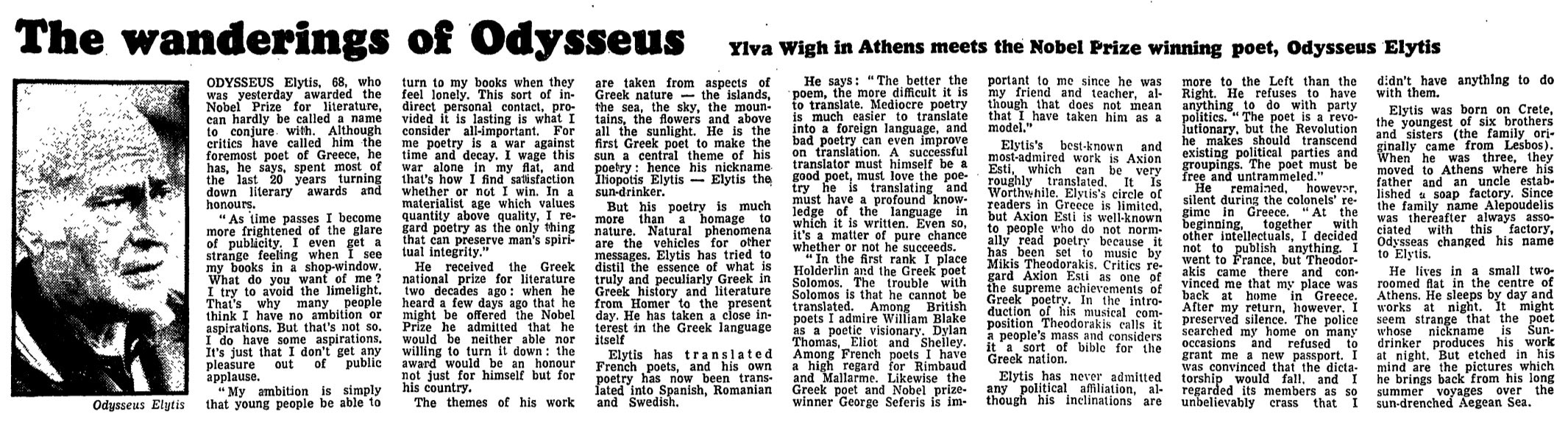
Posting Komentar